Success can be a wonderful thing.
A business establishes itself. Customers recognize the name. Systems begin working. Relationships develop. The organization becomes more confident about what it does and whom it serves.
But success can also create an unexpected temptation:
The temptation to stop changing.
When something is working, it’s natural to want to preserve it.
Yet some of the strongest businesses understand an important principle:
You don’t have to be failing to improve.
Successful organizations continue evolving—not because everything is wrong, but because they recognize that customers, technology, markets, expectations, and opportunities continue changing around them.
Strong Businesses Pay Attention
Business evolution doesn’t always require a dramatic transformation.
Often, it begins by paying attention.
What are customers asking for?
Where are people becoming frustrated?
Which processes take longer than they should?
What technology could make something easier?
Has the way customers discover the organization changed?
Does the company’s message still accurately represent what it has become?
Strong organizations ask these questions before circumstances force them to.
That’s an important distinction.
They don’t only react. They evaluate.
What Worked Yesterday May Need to Evolve Tomorrow
Every successful business has systems, strategies, and decisions that helped it reach its current position.
Those things deserve respect.
But something being successful in the past doesn’t automatically mean it will remain the best approach forever.
Consider how much business communication has changed.
Customers once relied heavily on telephone calls, printed directories, brochures and face-to-face introductions.
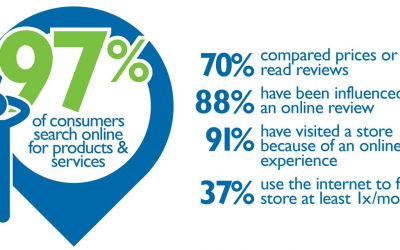
Today, someone may encounter a company through its website, Google search results, social media, an email, an online review, or a recommendation they immediately research from their phone.
The business itself may not have changed dramatically.
The way people experience the business has.
Strong organizations recognize that difference.
Evolution Isn’t the Same as Chasing Every Trend
There is also an important balance.
Evolving doesn’t mean changing everything whenever something new becomes popular.
Not every trend belongs in every business.
Strong companies know who they are.
They understand their customers.
They protect the things that make their organization distinctive.
The goal isn’t constant reinvention.
The goal is thoughtful improvement.
Ask:
Does this make the customer experience better?
Does this make our organization more efficient?
Does this strengthen our reputation?
Does this support where we’re trying to go?
If the answer is yes, the change may deserve serious consideration.
Your Customer Experience Should Grow With Your Business
As organizations grow, customer expectations often grow too.
A company serving hundreds or thousands of people may need different systems than it needed when serving its first few customers.
Communication may need to become clearer.
Processes may need to become easier.
Information may need to become better organized.
Technology may need to become more capable.
Your customer shouldn’t have to struggle simply because your organization has outgrown an older process.
Sometimes growth means recognizing:
“This worked when we were smaller. We need something better now.”
That’s not failure.
That’s maturity.
Your Brand Should Reflect Who You’ve Become
Businesses evolve internally, but sometimes their public presence gets left behind.
The organization may have:
Expanded its services.
Entered new markets.
Developed stronger expertise.
Built an impressive team.
Improved its customer experience.
Earned years of credibility.
Yet its branding or website may still represent the company as it looked many years ago.
That creates a disconnect.
Your public presence should help people understand the organization you are today, not merely the organization you used to be.
Your Website Is Part of Business Evolution
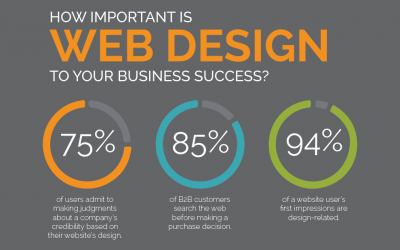
For many companies, the website has become one of the most important places where people experience the organization.
Before calling, scheduling, visiting, requesting information, submitting a proposal request, applying for a position, or making another important decision, someone may visit the website.
They are forming an impression.
Is the company current?
Can I trust it?
Can I find what I need?
Do I understand its services?
Is it easy to take the next step?
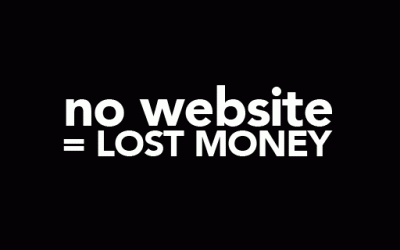
That’s why an established company shouldn’t view its website as something that was simply finished years ago.
A website should evolve as the organization evolves.
New services may need to be added.
Old information may need to disappear.
Navigation may need improvement.
Calls to action may need to change.
Mobile usability may need attention.
The website should continue supporting the business—not become a historical snapshot of what the business once was.
Improvement Doesn’t Mean Starting Over
One of the misconceptions about business improvement is that everything needs to be replaced.
It doesn’t.
Sometimes the smartest improvement is a refinement.
Keep what’s working.
Strengthen what’s weak.
Remove what’s unnecessary.
Update what’s outdated.
Add what’s missing.
And make sure the entire experience still supports the organization’s goals.
That’s true for business processes.
It’s true for customer relationships.
It’s true for marketing.
And it’s true for websites.
Strong Businesses Keep Asking, “What’s Next?”
Successful organizations celebrate progress.
But they don’t confuse success with completion.
There is always something to learn.
A relationship to strengthen.
A process to improve.
An opportunity to explore.
A customer experience to refine.
A technology to evaluate.
A better question to ask.
The strongest businesses don’t evolve because they’re afraid of being left behind.
They evolve because they’re committed to becoming better.
Success isn’t the end of growth.
Sometimes success gives you the foundation from which your most important growth can begin.
“Strong businesses don’t wait until something is broken to improve. They evolve because they’re committed to becoming better.”
Has your organization grown while your website has remained largely the same?
It may be time to evaluate whether your online presence still reflects the company you’ve become.
Alexa Website Designs helps established businesses and organizations create professional websites designed around where they are today—and where they’re headed next.